Twelve policy failures, one frame
DARE made the children who took it slightly more likely to drink. Nancy Reagan's Just Say No coincided with the largest sustained rise in US adolescent drug use of the post-war century. The federal prison population grew five-fold while the heroin and cocaine on the street got cheaper every year. Anti-obesity stigma campaigns are correlated with weight gain at population level — by the published cortisol mechanism. American 28-day rehab refuses methadone, which halves opioid mortality. UK prisons release inmates with no agonist therapy and lose them to overdose in the first fortnight. The evidence below is mostly older than the campaigns it audits.
DARE made the children slightly more likely to drink
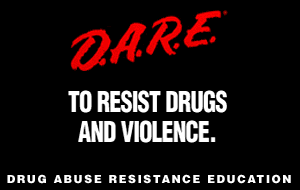
Drug Abuse Resistance Education — uniformed police officers in classrooms telling American children to say no to drugs — was rolled out from 1983 and at peak ran in 75 per cent of US school districts and 43 countries. It was the largest school-based drug-prevention programme in history. It was studied to death.
The verdict, by the early 2000s and overwhelmingly consistent across meta-analyses: no statistically significant reduction in subsequent drug use, and in several studies a small increase in some categories (most reliably alcohol). The US Surgeon General's 2001 Youth Violence report listed DARE under "Does Not Work". The General Accounting Office's 2003 report to Congress confirmed the same. DARE rebranded as "Keepin' It REAL" in 2009 and the evidence base for the rebrand is no stronger.
The reason it fails is the reason every pure-education addiction programme fails. Knowledge is necessary but not sufficient for behaviour change. People who smoke know smoking is bad for them. People who drink heavily know drinking is bad for them. People who eat ultra-processed food know its calorie content. The information gap is not the binding constraint. The willpower frame routinely confuses the necessary with the sufficient and is then surprised when the resulting curriculum does nothing.
Adolescent drug use rose every year Nancy ran the campaign
Nancy Reagan's 1982–88 campaign was the rhetorical surface of the same theory. The slogan was elegant. The policy was vacuous. It rested on the proposition that drug use is a discrete decision made by an informed agent, and that supplying the agent with the moral resolve to refuse would do the work. Adolescent drug use rose during the Just Say No era and continued to rise into the 1990s. Cocaine consumption peaked in the mid-1980s. Crack devastated US inner cities during the campaign's most active years. The campaign did not cause this — but it did not arrest it either, despite enormous budget and uncontested rhetorical real estate.
The honest read: Just Say No was an articulation, not an intervention. It told the country something the country wanted to hear about what addiction was — a discrete choice made by people of weak character — without doing anything that would have worked at the level of the actual mechanism. It is the cleanest example on the page of a policy designed to perform a theory of addiction rather than to address it.
The prison population grew five-fold; the drugs got cheaper
The willpower-and-education frame's biggest single policy artefact is criminalisation. If the user's behaviour is the result of insufficient moral resolve, you raise the cost of using by attaching custodial penalties to it. The cost-raising will deter the marginal user; the few who can't be deterred are by definition the addicted minority, and they can be processed through the criminal-justice system on the way to compulsory abstinence.
The actual results, fifty years in, are not contested in serious addiction-policy literature:
- The US prison population grew from ~330,000 in 1973 to over 1.6 million by 2010; a large fraction of that growth was drug-related.
- The disparate impact on Black Americans is well-documented — the ACLU's The War on Marijuana in Black and White (2013) and subsequent updates put Black Americans at ~3.6× the cannabis-arrest rate of white Americans despite essentially equal use rates.
- Drug supply did not contract. Purity rose, prices fell, in roughly every category measured by the ONDCP and EMCDDA across the period.
- The fentanyl era — the predictable end-state of a forty-year supply-side enforcement push that drove dealers toward ever-more-compact and ever-more-lethal opioids — is now killing ~75,000 Americans per year (CDC overdose data, 2024).
This is the policy outcome of taking the willpower frame seriously at scale. It is not a marginal-case argument. It is a forty-year case study in misallocated public money, ruined lives, and a body count that compounds annually. The Portuguese alternative is on the previous page. The cost differential is not subtle.
Scotland's 50p/unit minimum, 2018 onwards
The sin-tax frame is the most defensible policy artefact of the willpower theory, because it has a plausible mechanism: price elasticity is real, heavy drinkers do reduce consumption at higher prices, and excise revenue funds the very NHS the consumption strains. Minimum unit pricing in Scotland (50p/unit from May 2018) has reduced overall alcohol sales and there is plausible evidence of reduced alcohol-attributable hospitalisations and deaths in the most deprived quintile (Public Health Scotland evaluation series, 2023).
The Spiked critique (Tom Slater's "The killjoy state", 2024; Spiked's drink-and-drugs tag stream) is partly right and partly wrong. It is right that the policy is regressive — the same 50p/unit hits the £6 supermarket bottle of low-end wine harder than the £40 boutique gin — and falls disproportionately on the poor. It is wrong that the policy is ineffective; the Scottish evidence shows real reductions where they were targeted.
The cleaner critique is structural. Sin taxes pass on a discreet population the cost of a problem that the addiction-as-real model says is partly biological and not under that population's control. They are the willpower frame in fiscal form: we will make the behaviour expensive enough that you will stop doing it, and if you do not stop, you will be punished by your own pocket. For the moderate drinker, this is mild paternalism. For the addicted drinker — by definition, the population with the weakest price elasticity — it is a regressive tax on a condition they cannot will themselves out of. The Snowdon arithmetic on the Costs page bites hardest here.
Twenty years of change-for-life, eatwell-plate — BMI keeps getting bigger
The clearest case on the page where willpower-and-education theory has produced an intervention that actively makes the problem worse. The hypothesis behind every change-for-life, eatwell-plate, BMI-letter-to-parents, "ditch the fizzy drinks" campaign of the last two decades is the same: provide information, raise the social cost of obesity through stigma, and people will respond rationally.
The evidence base, twenty years in, is the opposite of the hypothesis. Rebecca Puhl at the UConn Rudd Center has built a 20-year research programme demonstrating that weight stigma independently predicts depression, disordered eating, cortisol elevation, avoidance of healthcare, and — perversely — further weight gain. A. Janet Tomiyama's group at UCLA has produced the experimental work showing the causal mechanism: stigma activates the cortisol stress response, cortisol drives appetite, the resulting behaviour change is in the wrong direction. The Major, Tomiyama & Hunger chapter in the Oxford Handbook of Stigma consolidates the literature.
UK obesity rates have risen continuously through every campaign run by every government in this period. Whatever the campaigns are doing, they are not reducing obesity. The mechanism the willpower frame assumes — informed shame produces behaviour change — is contradicted by the published evidence. Stigma-based public-health campaigns on obesity have plausibly increased the problem they were designed to address.
Abstinence-only sex-ed didn't delay sex. It raised pregnancy and STI rates.
The American case. Federal funding for abstinence-only sex education ran at over $2bn from the early 1990s to the early 2010s. The model: tell teenagers not to have sex; do not teach them about contraception; do not teach them about STI prevention; rely on moral instruction and willpower.
The outcome, repeatedly evaluated: abstinence-only programmes did not delay sexual initiation, did not reduce teenage pregnancy, did not reduce STI rates. In several studies they produced worse outcomes than comprehensive programmes because their graduates were less likely to use contraception when they did become sexually active. The Society for Adolescent Health and Medicine's 2017 position statement was unambiguous on this. US teenage pregnancy rates fell only after comprehensive sex education and reliable contraception became normalised — i.e. after the willpower frame was abandoned in favour of harm-reduction-meets-information.
This is not strictly an addiction case. It is on this page because it is a structurally identical policy failure. The frame says "more education, stricter moral standards"; the evidence says that combination does not move the dependent variable.
The Minnesota Model in action: medication is cheating, work the steps
The dominant US treatment model — 28 to 30 days residential, abstinence-only, often Minnesota Model 12-step facilitation, frequently no medication, regularly featuring confrontational group work — is the willpower-and-education frame in its therapeutic form. The implicit theory: the addict's problem is a lack of insight and moral resolve; intensive instruction and structured peer pressure will supply both; pharmacology is unnecessary or counterproductive.
The evidence base for this model is, as the Treatments page documents, thin. The Recovery Research Institute's review is candid about the gap between market dominance and outcome evidence. Methadone and buprenorphine — agonist therapies that more than halve opioid mortality in cohort data — were systematically excluded from the model for decades on the grounds that "replacing one drug with another isn't recovery". This is willpower theory in operational form: medication is cheating, the patient must do the work themselves. The result, measurable in body bags, is that hundreds of thousands of Americans with opioid use disorder cycled through abstinence-only programmes and then died of overdose during the relapse window when their tolerance had dropped.
This is the most expensive single policy artefact of the willpower frame in modern medicine. It is still the model most American insurance preferentially reimburses.
UK prisons release inmates with no agonist therapy and lose them in the first fortnight

The final case: the assumption that custodial sentencing is itself a treatment intervention, because removing the addict from access to the substance will produce abstinence and the time will produce reflection. The actual data: post-release overdose mortality is order-of-magnitude elevated compared to pre-incarceration rates, because tolerance drops during incarceration but craving and access return on release. The two-week post-release window is a documented mass-mortality event in every cohort study that has measured it. UK Office for National Statistics post-release-mortality data are unambiguous; US BJS data the same.
Prisons that do not provide opioid agonist therapy to inmates with opioid use disorder are, on the published mortality data, executing a significant fraction of those inmates on release. This is not rhetorical excess. It is what the cohort data say. The willpower-and-education frame says "use the custodial time to teach the lesson". The biology says "if you do not provide the medication, the predictable result is death in the first fortnight after release."
The disease frame's toolkit: substitution where biology calls for it, harm reduction in place
The pattern across every case on this page is the same. The willpower-and-education frame assumes a particular agent — informed, rational, responsive to instruction and social pressure — and designs interventions for that agent. The agent does not exist for the addicted population. The interventions therefore do not work for the addicted population, and frequently do not work for the non-addicted population either, because human behaviour change in any domain is harder than the frame imagines.
What follows from accepting the answer to the question on the home page — that addiction is real, distinct from willpower-and-education failure, and biological in mechanism — is a different toolkit. The shape of it is what the Treatments page evidenced. To summarise:
- Substitution where the biology calls for it. Methadone for OUD. Tirzepatide for the severely-obese hypertensive. Nicotine replacement and varenicline for tobacco. Bupropion or naltrexone for alcohol where indicated. The "is it cheating?" test fails on the consistency check — we do not apply it to insulin.
- Harm reduction in place, not abstinence as precondition. Managed Alcohol Programs for chronic homeless drinkers. Supervised consumption sites for IV drug users. Naloxone distribution. Drug checking. The Portuguese decriminalisation model with the funding restored.
- Incentives where they work. Contingency management for stimulants, deployed at scale rather than gestured at as a research finding.
- Housing-first. The Finnish, Canadian and Utah data on permanent supportive housing for chronically homeless populations consistently show net savings on emergency-services use, alongside the moral case.
- Stop the active harms. End custodial sentencing for personal-use possession. Provide opioid agonist therapy in every prison. Withdraw funding from abstinence-only sex-ed and weight-stigma campaigns. Treat sin taxes as regressive transfers, not health interventions, and design them with that honesty.
- Keep the parts of the willpower frame that work. Cultural change moves averages — the smoking case demonstrates this. Cheap, manualised peer support outperforms expensive professional therapy — the Cochrane AA finding demonstrates this. Self-regulation is a real and trainable faculty, and CBT-style interventions have their place. The lab tech is right that asking an adult to do the harder thing is sometimes the right call. The frame fails when it imagines that is the whole job.
The three panellists on the next page defend this toolkit, from their three angles. They do not always agree on tactics. They agree on the answer to the question.
Argue with this.
The thesis is contested by design. Two ways in.
Highlight any line, drop a note in the rail.
Select any sentence. A bubble opens in the right margin. Free Hypothesis account; team reviewers switch the group dropdown from Public to Articulate.
Or argue down here, in the open.
One thread per page, indexed by Google, threaded by GitHub Discussions. Sign in with your GitHub to comment.